What Is the Difference Between a GLP-1 Class Action and an MDL?
Last Updated on April 30, 2026 by Patrick A. Salvi II
Millions of Americans have turned to GLP-1 drugs like Ozempic and Wegovy to manage diabetes and weight, but a growing number of those patients have experienced severe and unexpected health complications. For those individuals, having an experienced law firm with a proven track record in pharmaceutical litigation and dangerous drugs cases can mean the difference between inadequate compensation and results that truly reflect the extent of their suffering.
At Salvi, Schostok & Pritchard P.C., we have represented injured clients in Chicago and throughout Illinois for over 40 years, and we know how to secure meaningful results. We have recovered more than $3.5 billion in verdicts and settlements on behalf of our clients, including more than 400 verdicts and settlements of $1 million or more.
Our legal experience extends to navigating the legal process in complex pharmaceutical litigation and mass torts. Our product liability attorneys know how to handle large-scale claims and take on big, well-funded defendants, such as corporate manufacturers of GLP-1 drugs. In a case involving toxic exposure, Equity Partner Patrick A. Salvi served as co-lead counsel in negotiating global settlements totaling $456 million for nearly 900 plaintiffs. In product liability cases specifically, we previously secured individual settlements of $4 million and $3.15 million for clients in Lake County, Illinois.
If you or a family member has experienced serious complications after taking a GLP-1 drug such as Ozempic, Wegovy, Mounjaro, or Zepbound, our Chicago product liability lawyers are here to help. Contact us today to arrange a free consultation and learn more about your legal options.
What Are GLP-1 Drugs?
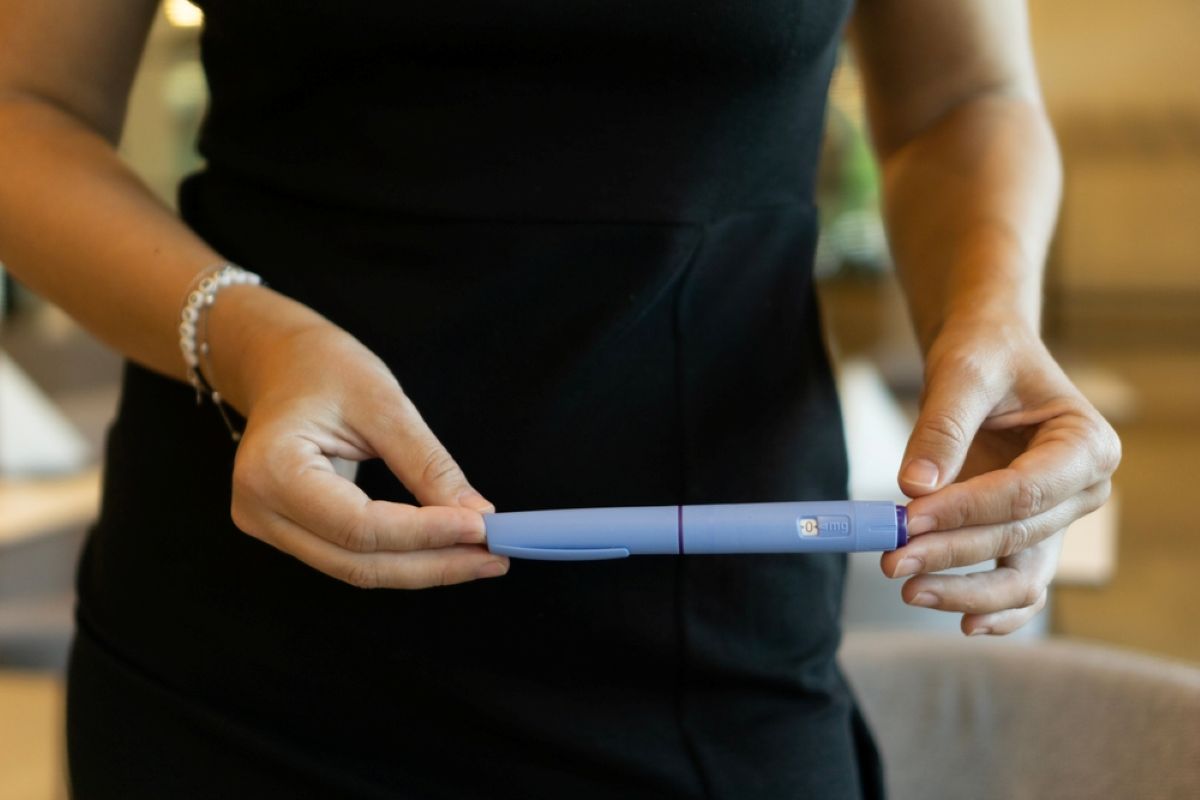
Glucagon-like peptide-1 (GLP-1) receptor agonists are a class of prescription drugs originally developed to treat type 2 diabetes. These drugs work by mimicking a hormone the body produces naturally, one that slows digestion, stimulates insulin production, and signals the brain to reduce appetite. Because of those effects, GLP-1 medications can also facilitate significant weight loss, which has driven their widespread use far beyond the diabetic patient population. Brand names in this class of drugs include Ozempic, Wegovy, Rybelsus, and Saxenda, manufactured by Novo Nordisk, and Mounjaro, Zepbound, and Trulicity, manufactured by Eli Lilly.
Common Injuries Associated with GLP-1 Drugs
A growing body of research and patient reporting has linked GLP-1 drugs to severe complications in some users. GLP-1 drugs have been associated with a range of serious side effects that have prompted thousands of vision loss claims and personal injury lawsuits. The most common injuries associated with these medications include:
- Gastrointestinal injuries: Many patients report severe gastroparesis (delayed stomach emptying), persistent vomiting, chronic nausea, abdominal pain, intestinal obstruction, and bowel injuries. These complications can require hospitalization, surgery, and ongoing medical care.
- Gallbladder disease: Some users have developed gallstones or gallbladder inflammation, leading to additional medical expenses and, in some cases, surgical removal.
- Vision loss claims: There is a growing number of reports linking GLP-1 drugs to non-arteritic anterior ischemic optic neuropathy (NAION), a condition that reduces blood flow to the optic nerve and can cause sudden, permanent vision loss.
- Blood clots: Deep vein thrombosis (DVT) and pulmonary embolism (PE) have also been reported, posing life-threatening risks.
Plaintiffs in thousands of lawsuits now pending in federal and state courts allege that the manufacturers of these drugs failed to adequately warn patients and physicians about these severe risks.
What Is a Class Action Suit?
A class action lawsuit is a legal action that allows a group of plaintiffs with substantially similar claims against the same defendant(s) to consolidate those claims into a single case. In this type of lawsuit, one or more named plaintiffs represent the entire group or class. The outcome of the case, whether it is a settlement or a trial verdict, applies collectively to all class members. Class actions are common in consumer fraud, data breach, and securities litigation, where large numbers of people have suffered similar harm in similar ways, and individual losses are relatively uniform.
What Is Multidistrict Litigation (MDL)?
Multidistrict litigation (MDL) is a federal procedural mechanism that allows courts to consolidate related cases filed in different locations before a single judge for coordinated pretrial proceedings. Unlike a class action, an MDL case does not merge individual claims into a single case. Each plaintiff retains their own case and their own attorney. The consolidation applies only to pretrial matters, such as discovery and expert testimony, with the goal of reducing redundancy and ensuring consistent rulings across all related cases.
Requirements for Filing a Class Action Lawsuit
Class action lawsuits must follow a formal set of legal requirements established under Rule 23 of the Federal Rules of Civil Procedure. Before a court will certify a class action under this rule, plaintiffs must demonstrate that their case satisfies four key threshold criteria:
- The class must be sufficiently numerous that it would be impractical for the court to handle all lawsuits individually.
- The plaintiffs must share common legal questions or facts that apply across the entire group.
- The claims of the named plaintiffs must be typical of those of the broader class.
- The named plaintiffs and their attorneys must demonstrate that they can adequately represent the interests of all class members.
Beyond those foundational requirements, plaintiffs must also show that a class action is the most appropriate vehicle for resolving the dispute. Courts will evaluate whether common legal questions outnumber individual ones and whether consolidating the claims into a single proceeding would serve the interests of judicial efficiency.
This last requirement is often where pharmaceutical injury cases fall short. If plaintiffs have suffered different injuries, at different levels of severity, with different medical histories and economic circumstances, courts may find that individual questions outweigh common ones. If so, class certification may be inappropriate, and MDL may be a more suitable path forward.
Requirements for an MDL Case
Multidistrict litigation does not require plaintiffs to meet the same certification standards as a class action. Instead, the US Judicial Panel on Multidistrict Litigation simply evaluates whether consolidation serves the interests of judicial efficiency and fairness.
For the panel to consolidate cases into an MDL, the actions must involve one or more common questions of fact. Typically, this means the cases share a common defendant, a common product, and substantially similar allegations. The panel will also consider whether centralization would reduce redundant discovery, prevent inconsistent pretrial rulings across different courts, and conserve the resources of both the parties and the federal judiciary.
Plaintiffs do not need to file their cases in a particular court to participate in an MDL. Cases filed in federal courts nationwide can be transferred to the MDL court for pretrial proceedings. Each plaintiff, however, must still satisfy the basic requirements of an individual personal injury lawsuit. This means they must establish that they used the product at issue, that they suffered qualifying injuries, and that a causal connection exists between the product and their injuries.
In pharmaceutical MDL cases, courts may also impose additional case-specific requirements. In the GLP-1 gastrointestinal MDL, for example, the presiding judge has required plaintiffs alleging gastroparesis to provide objective medical documentation confirming their diagnoses.
Key Differences Between a Class Action Lawsuit and an MDL
Both class actions and multidistrict litigation allow courts to manage large numbers of related legal claims more efficiently. However, they function in fundamentally different ways, and those differences can have significant implications for injured plaintiffs.
In a class action, one or a small number of named plaintiffs represent the entire group or “class.” The court treats the entire class as a single legal unit, and any settlement or verdict applies collectively to all members of the class. Individual plaintiffs have limited control over how their cases proceed. Most typically do not participate directly in litigation decisions, and any compensation they receive is a share from a common pool rather than an individual assessment of their specific losses.
In an MDL case, each plaintiff retains their own individual claim. While the cases are consolidated before a single federal judge for pretrial proceedings, like discovery and key legal rulings, each plaintiff’s case ultimately stands on its own. If the MDL does not resolve through a global settlement, individual cases can return to their home courts for trial. This structure allows plaintiffs to pursue individual compensation awards that reflect the full extent of their particular losses.
The role of each plaintiff’s attorney also differs between the two structures. In a class action, a small group of attorneys typically controls the litigation on behalf of the entire class. In an MDL, each plaintiff retains their own lawyer, who advocates specifically for their client’s interests throughout the process.
For plaintiffs who have suffered serious, individualized injuries, which is common in pharmaceutical product liability cases, the MDL structure is generally far more favorable than a class action. This is because it preserves each plaintiff’s right to seek compensation proportionate to their own losses.
Differences in Damages in an MDL vs Class Action
The structure of payouts differs significantly between class actions and MDL proceedings, and that difference can have enormous implications for plaintiffs who have suffered serious harm.
In a class action, courts typically determine damages (monetary awards) on a collective basis. If the case is resolved by settlement, the total amount is divided among all class members, often resulting in modest individual recoveries. Class members generally do not have the opportunity to present evidence of their specific losses. This means the compensation formula the court approves may not account for the full extent of any individual plaintiff’s medical bills, lost wages, or long-term care needs.
MDL cases, by contrast, preserve each plaintiff’s right to pursue individualized compensation. While the courts consolidate pretrial proceedings, the damages phase of the litigation accounts for each plaintiff’s specific circumstances. A plaintiff who suffered permanent vision loss, for example, would pursue a very different payout than one who experienced severe but temporary gastrointestinal complications.
For plaintiffs with serious, lasting injuries, this distinction makes MDL a substantially more favorable structure than a class action.
Why GLP-1 Drug Lawsuits Are Being Filed as an MDL
GLP-1 drug injury claims are particularly well-suited to an MDL structure because the injuries plaintiffs have suffered vary significantly from one individual to the next. Many plaintiffs have developed gastroparesis, a chronic condition that causes the stomach to slow or stop emptying food into the small intestine. Others have suffered intestinal obstructions, bowel injuries, or gallbladder complications that have required surgical intervention. A growing number of plaintiffs also allege that GLP-1 medications contributed to a serious eye condition called non-arteritic anterior ischemic optic neuropathy, or NAION. This condition reduces blood flow to the optic nerve and can cause sudden, permanent vision loss.
Because these injuries differ in nature and severity, and the resulting losses vary widely among plaintiffs, a uniform compensation structure in a class action might not make sense. The MDL structure allows each plaintiff to pursue compensation that reflects their individual circumstances while still benefiting from the efficiencies of consolidated pretrial proceedings.
Two separate GLP-1 MDL proceedings are currently underway in the Eastern District of Pennsylvania. MDL No. 3094 addresses gastrointestinal injury claims and presently includes several thousand federal cases. MDL No. 3163 addresses NAION and vision loss claims and continues to grow as more plaintiffs come forward. US District Judge Karen Marston is presiding over both proceedings, with the first bellwether trials in the gastrointestinal MDL not expected until 2027.
GLP-1 side effects have also drawn regulatory attention. In March 2026, the US Food and Drug Administration (FDA) sent a warning letter to Novo Nordisk, the manufacturer of Ozempic and Wegovy. The FDA cited the company’s failure to properly report certain serious adverse events, including at least one patient death. While the FDA did not conclude that the drugs caused those events, the warning letter reflects the level of scrutiny these medications now face from federal regulators. It also underscores the importance of experienced legal representation for plaintiffs pursuing claims against these pharmaceutical giants.
Speak With Our Chicago Product Liability Lawyers
If you have suffered serious injuries after taking a GLP-1 medication, you might be facing a difficult road ahead that may include ongoing medical treatment, financial strain, and uncertainty about the future. A successful product liability claim cannot undo that harm, but it can provide meaningful compensation that facilitates a fair recovery. Salvi, Schostok & Pritchard P.C. is here to help you demand that fair recovery.
Drug companies retain large, well-funded legal teams whose sole purpose is to minimize or defeat injury claims. Salvi, Schostok & Pritchard P.C. meets that kind of opposition with experienced, tenacious advocacy on behalf of every client we represent in Chicago and throughout Illinois. Contact us now to speak with a member of our legal team about your potential GLP-1 claim in a free initial consultation.