Breast Cancer Misdiagnosis Lawyer in Chicago
Last Updated on August 26, 2026 by Patrick A. Salvi II
Breast cancer misdiagnosis can have devastating effects on you and your loved ones. Facing undiagnosed breast cancer or undergoing treatment for a non-existent condition is likely to result in needless pain, suffering, and expense. Those responsible for your pain should be held accountable and made to pay for their mistakes.
If a breast cancer misdiagnosis has impacted you or a loved one, contact Salvi, Schostok & Pritchard P.C. for a free, no-obligation consultation. Our team of knowledgeable medical malpractice lawyers will discuss your case and discover the potential compensation you could receive for your pain and suffering.
How Working with an Experienced Medical Malpractice Attorney Can Help
You can hold negligent healthcare providers accountable by seeking legal assistance and fighting to recover the compensation you deserve for your suffering and expenses. Your actions may also help protect other breast cancer patients from undergoing a similar situation.
The Chicago cancer misdiagnosis lawyers at Salvi, Schostok & Pritchard P.C. have extensive experience handling cases where a healthcare provider failed to diagnose cancer accurately. We understand the intricacies of medical malpractice claims and will advocate tirelessly and effectively on your behalf.
A medical malpractice attorney can help you get compensation by:
- Gathering and Analyzing Medical Records – Our lawyers meticulously review all your medical records to identify inconsistencies and errors. We build a detailed picture of how the misdiagnosis occurred and its impact on your health.
- Consulting with Medical Experts – We collaborate with leading medical experts to validate our findings and build credibility to strengthen your case. Expert testimony can be pivotal in demonstrating how negligence led to your harm and suffering.
- Building a Strong Case – Our attorneys construct a compelling narrative showing how the healthcare provider’s actions deviated from acceptable standards of care. This includes highlighting specific instances of negligence or error with evidence and expert testimony.
- Seeking Maximum Compensation – We fight for the highest possible compensation to cover your medical treatment, lost wages, and future care needs. Additionally, we seek compensation for your emotional and physical pain and suffering.
- Negotiating with Insurance Companies – Our lawyers handle all communications and negotiations with insurance companies to protect your rights. This allows you to focus on your recovery or caring for an affected loved one.
- Litigating for You in Court – We aggressively negotiate a fair settlement to avoid the need for legal action, but we do not shy away from fighting injustice. As reputable litigators, we are familiar with presenting complex medical evidence in a clear-cut manner to a judge or jury.
- Providing Support and Guidance – Our attorneys know how challenging it can be to pursue compensation on top of going through a cancer misdiagnosis or delayed diagnosis. We keep you informed and supported while we manage your medical malpractice claim.
At Salvi, Schostok & Pritchard P.C., our medical malpractice attorneys have recovered more than $3.5 billion to date, including more than 400 seven-figure awards and the highest compensatory verdict awarded to an individual plaintiff in Illinois history. Our medical malpractice case results include:
2026 Breast Cancer Misdiagnosis Fact Sheet
Incidence and Mortality (U.S., 2026)
| Metric | Value | Source |
| New invasive female breast cancer cases (U.S. 2026) | 321,910 | ACS Cancer Facts & Figures 2026 (Table 1) |
| New invasive male breast cancer cases (U.S. 2026) | 2,670 | ACS Cancer Facts & Figures 2026 (Table 1) |
| New female DCIS (in situ) cases (U.S. 2026) | 60,730 | ACS Cancer Facts & Figures 2026 |
| Female breast cancer deaths (U.S. 2026) | 42,140 | ACS Cancer Facts & Figures 2026 (Table 1) |
| Male breast cancer deaths (U.S. 2026) | 530 | ACS Cancer Facts & Figures 2026 (Table 1) |
| Total breast cancer deaths (U.S. 2026) | 42,670 | ACS Cancer Facts & Figures 2026 |
| Lifetime probability of invasive breast cancer in U.S. women | About 13.0% (1 in 8) | NCI SEER Cancer Stat Facts |
| Median age at female breast cancer diagnosis | 63 years | NCI SEER Cancer Stat Facts |
Stage at Diagnosis Drives Survival — Why Timing Matters
| Stage at diagnosis | Share of cases | 5-year relative survival: Female breast cancer | Source |
| Localized (confined to the breast) | 64% | 100.0% | NCI SEER |
| Regional (nearby lymph nodes or tissue) | 27% | 87.5% | NCI SEER |
| Distant (metastatic) | Unknown 3% | 70.6% | NCI SEER |
| All stages combined | 100% | 91.9% | NCI SEER |
The roughly 67-point survival gap between localized and distant disease is the clinical harm at the center of most delayed-diagnosis claims. Because 64% of U.S. female breast cancers are diagnosed at localized stage, any delay that allows progression from localized to regional or distant disease directly moves a patient from a ~100% survival cohort to a 32.6% survival cohort.
Stage at Diagnosis Drives Survival — Why Timing Matters
| Delay | Treatment modality | Increase in mortality risk | Source |
| Every 4 weeks | Across surgery, systemic, and radiotherapy (7 cancers) | 6%–13% | Hanna et al., BMJ 2020 |
| 8 weeks | Breast cancer surgery | 17% (HR 1.17; 95% CI 1.08–1.25) | Hanna et al., BMJ 2020 |
| 12 weeks | Breast cancer surgery | 26% (HR 1.26; 95% CI 1.13–1.40) | Hanna et al., BMJ 2020 |
The Hanna et al. systematic review (34 studies, 1.2 million+ patients) quantifies the dose–response relationship between diagnostic/treatment delay and mortality — a causal anchor for delayed-diagnosis damages analysis.
Screening Accuracy and Dense Breast Tissue
| Metric | Value | Source |
| Screening mammogram false-negative rate (overall) | About 20% (1 in 5) | ACS Cancer Facts & Figures 2026 |
| Share of U.S. women aged 40+ with dense breast tissue | About 50% | CDC — Dense Breasts |
| FDA Mammography Quality Standards Act dense-breast notification — effective date | September 10, 2024 | FDA MQSA Final Rule |
Since September 10, 2024, every U.S. mammography facility is required to notify patients of their breast density classification. Dense tissue both lowers mammography sensitivity and is an independent risk factor for breast cancer — two compounding effects that make failure to recommend or follow up supplemental imaging a recurring fact pattern in misdiagnosis claims.
Illinois-Specific Incidence and Mortality
| Metric | Illinois rate | Source |
| Illinois female breast cancer incidence rate (age-adjusted, 2018–2022) | 136.4 per 100,000 women | ACS Cancer Facts & Figures 2026 (Table 4) |
| Illinois female breast cancer death rate (age-adjusted, 2019–2023) | 19.7 per 100,000 women | ACS Cancer Facts & Figures 2026 (Table 5) |
Illinois Legal Framework
| Statute | What it requires | Citation |
| Statute of limitations | 2 years from the date the claimant knew, or through reasonable diligence should have known, of the injury. | 735 ILCS 5/13-212(a) |
| Statute of repose | No action may be filed more than 4 years after the alleged act or omission, subject to limited statutory exceptions. | 735 ILCS 5/13-212(a) |
| Statute for minors | Up to 8 years from the act or omission, but never later than the minor’s 22nd birthday. | 735 ILCS 5/13-212(b) |
| Affidavit of merit | Required: plaintiff must file an attorney’s affidavit and a qualified health professional’s written report certifying a reasonable and meritorious cause for filing. | 735 ILCS 5/2-622 |
What Factors Contribute to Breast Cancer Misdiagnosis?
Several factors contribute to breast cancer misdiagnosis, including:
- Primary Care Diagnostic Errors – A lack of specialized knowledge or insufficient examination can lead to breast cancer misdiagnosis. These errors often arise from inadequate training or failure to follow proper diagnostic protocols. Similar diagnostic failures can occur in other forms of cancer, including Colon Cancer Misdiagnosis or prostate cancer misdiagnosis, where symptoms may initially be mistaken for less serious gastrointestinal or urological conditions, delaying treatment and worsening outcomes.
- Doctor’s Negligence – Failure to order appropriate tests or misinterpreting test results can lead to cancer misdiagnosis and overdiagnosis. Similar diagnostic failures can affect other forms of cancer, making it important to understand your legal options with experienced Oral Cancer Misdiagnosis Attorneys.
- Breast Biopsy Errors – Poor quality or inaccurate interpretation of a breast biopsy affects the accuracy of a cancer diagnosis. Inaccurate biopsies can lead to unnecessary treatments or missed diagnoses, causing further complications.
- Lab Errors – Mislabeled, lost, or incorrectly attributed lab results contribute to breast cancer misdiagnosis. Such errors can mislead healthcare providers and delay proper diagnosis and treatment.
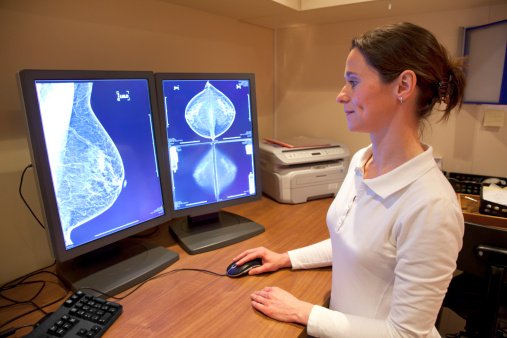
- Low-Image Mammograms – Digital mammography is more accurate than film mammography in detecting cancer in women under 50, those with dense breast tissue, and premenopausal or perimenopausal women. Diagnostic challenges can also arise during pregnancy, when hormonal and physical changes may make breast abnormalities more difficult to evaluate. Because symptoms during these life stages are often overlapping and complex, patients are also uniquely vulnerable to a misdiagnosis of ovarian cancer. Learn more about Misdiagnosis and Pregnancy and the impact of delayed or missed diagnoses.
- Communication Breakdowns – Poor communication between healthcare providers can lead to incomplete or incorrect patient information, further contributing to misdiagnosis and delayed treatment.
Consequences of a Breast Cancer Misdiagnosis
The consequences of a breast cancer misdiagnosis can be drastic. Patients with a breast cancer misdiagnosis or overdiagnosis:
- May undergo chemotherapy, radiation, surgery, and other treatments they do not need
- Often suffer the severe side effects of these treatments
- Go into debt for high medical bills and lost wages
- Suffer considerable mental anguish for a disease they do not have
Patients with a delayed diagnosis are at greater risk of their cancer advancing and spreading. They experience:
- Less viable treatment options
- More aggressive and invasive treatments
- Less successful outcomes
Contact Our Skilled Medical Malpractice Attorneys for a Free Consultation
If you or a loved one has been affected by a breast cancer misdiagnosis, the Chicago cancer misdiagnosis lawyers at Salvi, Schostok & Pritchard P.C. can help. We understand the importance of a timely diagnosis and the severe implications of a healthcare provider’s failure to deliver an accurate diagnosis. Count on our lawyers to evaluate your case and provide information so you can make the right choice for you or a loved one. Contact us today to get started with a free, no-obligation consultation. Our firm also handles other cancer misdiagnosis claims — if you believe a missed or delayed diagnosis involved a different cancer type, learn more about our work with misdiagnosis of pancreatic cancer in Chicago.